Что вы должны знать о диоксиде титана

Is titanium dioxide harmful? In which products is it used? Are there alternatives? All these questions are being asked about an ingredient in food products that most of us consume on a regular basis.
Some food companies have taken the initiativeto remove titanium dioxidefrom some of their products. Policymakers have amendedto ban titanium dioxidein France.
Is this ingredient, which sounds like it could be part of a metal, part of chemical safety? We reached out toWesterhoff, PaulPhD, PE, BCEE, Deputy Dean for Research and Innovation, Ira A. Fulton Schools of Engineering at Arizona State University for some answers.
"I don’t think TiO2 [titanium dioxide] poses a threat to human health," he said.
What is titanium dioxide and why is it used in food production?
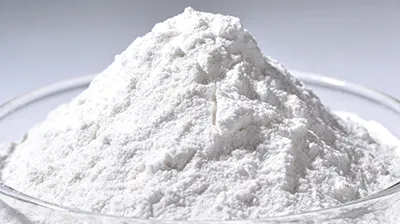
Dr. Westerhoff: Titanium dioxide is a common additive in many food products, personal care items, and other consumer goods. It is sometimes used as a whitener and sometimes as an anti-caking agent (to prevent products from clumping). Titanium dioxide also gives some products texture, which can also be used to create abrasion, as found in some toothpastes.
What products contain titanium dioxide?
Dr. Westerhoff: Titanium dioxide is most commonly found in candies, sweets, and chewing gums. It is used in some chocolates to give them a smooth texture and in donuts to provide color and texture. Among personal care items, it is most commonly found in toothpaste and some sunscreens.
Is titanium dioxide safe for human consumption?
Dr. Westerhoff: While there is limited information on the risks associated with consuming titanium dioxide, the U.S. Food and Drug Administration generally recognizes it as safe. Research conducted by Arizona State University analyzed numerous available products for the presence of titanium dioxide, including powdered donuts, chewing gum, whipped frostings, vanilla pudding, and chocolate bars. Our studies found titanium dioxide in the tested products and also found that up to 5 percent of titanium dioxide in some products was in the form of nanoparticles. Toxicity studies of nanoparticles in titanium dioxide have primarily focused on risks associated with inhalation rather than consumption.
Children are exposed to more titanium dioxide than adults due to their diet. Their diet consists of more candies, sweets, and gums, but this generally changes as children grow older.
Are there alternatives to titanium dioxide that food companies can use?
Dr. Westerhoff: Other ingredients that can be used instead of titanium dioxide include calcium phosphate and silicon dioxide.
In addition to Dr. Westerhoff’s expert insight, we foundthis articlein The Conversation addressing questions about titanium dioxide. Some key takeaways:
Titanium dioxide (not metallic titanium) is an inert, insoluble material that makes things whiter, including food products, paper, paints, and plastics.
The biggest concerns about titanium dioxide seem to be specific to nanoparticles, but one expert explained that assuming one type [of nanoparticles] is potentially harmful because of what another type does is equivalent to avoiding apples because you’re allergic to oysters.
Some studies suggest the possibility of harm, but they lack information on how much material and under what conditions significant harm could occur. Other studies show no effects.
Fig.
-
Титановые изделия: рыночные котировки (30 сентября)6194
-
Ежедневный отчет по техническому углероду: цены обрушились, спрос снижается (30 сентября)6170
-
Ежедневник Натурального Каучука: Горячие фьючерсы, холодная торговля — рынок на двух скоростях (30 сентября)9610
-
Яньтайский порт оптимизировал обслуживание, эффективно справляясь с пиковыми нагрузками пассажиропотока в период праздников по случаю Национального дня.4999
-
智能机器人在国庆假期期间上岗于东钱湖.3841